


Full-Face vs Open-Face MTB Helmets: Which Should You Choose?
Full-face and open-face mountain bike helmets solve different problems. A full-face helmet adds chin and facial coverage for faster, more technical riding, while an open-face helmet prioritises ventilation, low weight and comfort when pedalling. The right choice depends on your terrain, speed, riding style and the level of coverage you want.
Quick Answer: Full-Face or Open-Face MTB Helmet?
Choose a full-face MTB helmet when your rides regularly include high-speed descents, bike parks, jumps, drops, rocky enduro stages or terrain where a crash could involve the face and jaw. Choose an open-face MTB helmet when long climbs, XC, trail riding, heat management and low weight matter more than additional facial coverage.
Full-face makes more sense when...
You descend fast, ride technical terrain, use bike parks or want chin and jaw coverage in addition to head protection.
Open-face makes more sense when...
You spend more time pedalling and climbing and value airflow, low weight, comfort and easy communication.
Modular can make sense when...
Your rides mix long climbs with technical descents and the removable chin bar is approved for the intended use.
The most useful rule: choose the helmet for the most demanding part of your normal ride, not for the easiest section. A helmet that is perfect for a long XC climb may not provide the coverage you want for repeated bike-park descents, while a downhill-oriented full-face can feel unnecessarily hot and heavy on a long endurance loop.

Full-Face vs Open-Face: What Actually Changes in Protection?
The key difference is coverage. Both helmet types are designed to protect the head, but a full-face design also surrounds the lower face with a chin bar. That extra structure can matter when crashes involve the jaw, chin or face.
An open-face helmet leaves those areas exposed, but usually gives the rider lower weight, more ventilation and less heat build-up. That is why helmet choice is not simply a contest between “safer” and “less safe”: it is a trade-off between coverage and the practical demands of the ride.
What a full-face helmet adds
- Chin and jaw coverage.
- More enclosure around the face.
- More suitability for gravity-focused riding.
- Greater protection from branches, rocks and debris around the lower face.
What an open-face helmet preserves
- Higher airflow around the face and head.
- Lower weight for long rides and climbs.
- Easier drinking, talking and temperature management.
- A less enclosed feel for XC and trail use.
Do not overlook fit. A helmet should sit level, stay stable when you move your head and fasten securely without creating painful pressure points. Correct fit is fundamental regardless of helmet type.
The Three Main MTB Helmet Formats
Mountain biking ranges from low-speed forest riding to downhill tracks and bike parks. These different use cases have produced three main helmet formats rather than one universal solution.
Full-Face MTB Helmets
Designed for riders who want head protection plus an integrated chin bar and broader facial coverage.
- Downhill and gravity riding
- Bike parks and repeated descents
- Technical enduro terrain
Open-Face MTB Helmets
Designed around head coverage, ventilation and low weight while leaving the face and jaw open.
- Cross-country
- Trail riding
- Long climbs and endurance rides
Modular MTB Helmets
Use a removable chin bar to switch between a more open climbing setup and additional coverage for descents.
- Mixed climb-and-descent routes
- Riders who want one adaptable helmet
- Use only as permitted by the helmet manufacturer
Full-Face MTB Helmets: Where They Make the Most Sense
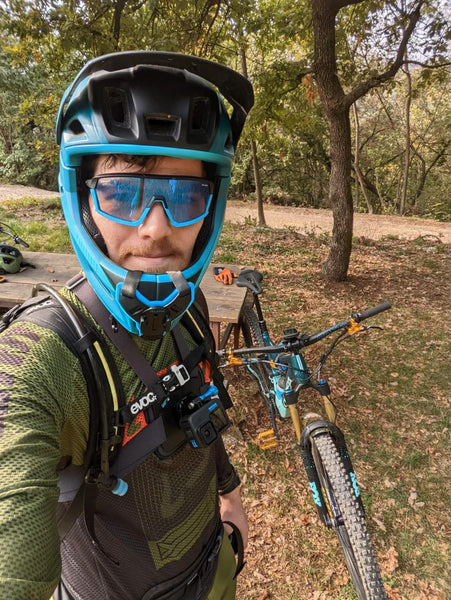
A full-face mountain bike helmet is primarily about adding coverage around areas an open-face helmet leaves exposed. This becomes more relevant as speed, technical difficulty, jump size and the consequences of a crash increase.
The trade-off is that the helmet is generally more enclosed. Even well-ventilated models can feel warmer and heavier during long climbs, slow transfers or hot-weather riding.
When a Full-Face Helmet Is Usually the Stronger Choice
Gravity-Focused Riding
Downhill, freeride and bike-park sessions expose riders to repeated high-speed descents and technical features.
Technical Enduro
Steep rock gardens, drops, roots and fast timed descents can justify the extra facial coverage.
Progressing to Bigger Features
If your riding is moving toward larger jumps, steeper trails or more committed lines, your protection strategy may need to change too.
When Confidence Depends on Coverage
Some riders simply feel more comfortable committing to technical terrain when the jaw and lower face are covered.
Full-Face Trade-Offs to Consider
- Heat: less open space around the face can increase perceived warmth.
- Weight: extra structure normally means more mass than an open-face design.
- Climbing comfort: long, slow ascents can make ventilation limitations more noticeable.
- Bulk: carrying or storing a full-face helmet is less convenient.
- Eyewear fit: check that your glasses or goggles sit correctly without pressure from the shell or straps.
Open-Face MTB Helmets: Why Trail and XC Riders Prefer Them
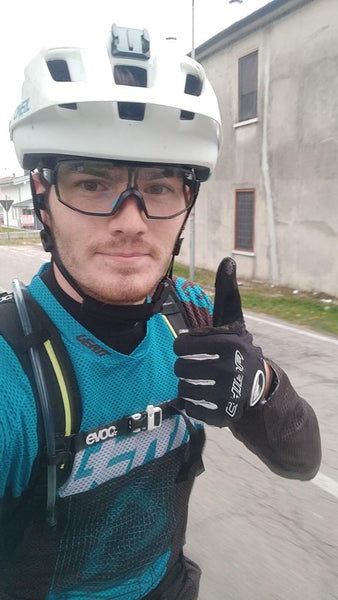
Open-face helmets, sometimes called half-shell or chinless helmets, are built around the reality that many mountain bike rides involve substantial pedalling. When climbs, endurance and heat management dominate the day, lower weight and airflow can be more useful than the extra coverage of a chin bar.
The limitation is straightforward: the face, jaw and chin remain exposed. The more aggressive the terrain becomes, the more important that difference is likely to feel.
Where Open-Face Helmets Work Especially Well
Cross-Country
Low weight and ventilation suit sustained pedalling, repeated climbs and race-style effort.
Trail Riding
For moderate technical terrain, an open-face design can balance protection with all-day comfort.
Long and Hot Rides
More airflow becomes increasingly valuable as duration, temperature and climbing time increase.
Everyday MTB Use
Simple fit, easy hydration and lower bulk make open-face helmets convenient for frequent mixed-terrain rides.
Common mistake: using the category name alone to decide. “Trail” can describe anything from smooth forest singletrack to steep rock features. Judge the actual terrain and speed of your rides, not just the discipline label.

How to Choose the Right MTB Helmet
Start with the riding you actually do. Then check fit, certification, ventilation and compatibility. Brand name should come after those fundamentals, not before them.
1. Identify the Highest-Risk Part of Your Normal Ride
Think about your fastest descents, steepest terrain, biggest drops and most technical sections. If those sections are a regular part of the ride, they should carry more weight in the decision than an easy approach trail.
2. Measure Your Head and Test the Actual Fit
Measure around the widest part of your head, normally just above the eyebrows and around the back of the skull. Use the manufacturer’s size chart as a starting point, but rely on the real fit: the helmet should feel secure and even, without painful pressure points or large areas of movement.
3. Check the Certification for Your Market and Intended Use
Do not assume every bicycle helmet is designed for every MTB discipline. Check the certification printed on the helmet or in the manufacturer’s documentation and make sure it is appropriate for the market where it is sold and the riding you plan to do. Downhill-oriented helmets may carry additional performance certification beyond a standard bicycle helmet requirement.
4. Evaluate Ventilation in the Context of Your Ride
Ventilation is not just a comfort detail. If your route includes long climbs, slow technical sections or hot summer conditions, heat build-up can become distracting. A rider using chairlifts for most climbs has a very different ventilation requirement from an XC rider climbing for an hour.
5. Test Glasses or Goggles With the Helmet
Helmet and eyewear should work as one system. Check that the helmet does not push the temples of your glasses into your head, that straps do not interfere with the frame and that goggles sit correctly inside the eye port of a full-face helmet.
6. Check the Details You Will Use Every Ride
Useful features can include removable washable pads, an adjustable visor, a secure retention system, eyewear storage channels, goggle compatibility and buckles that are easy to operate. Choose features because they solve a real problem for you, not because the specification list is longer.
Full-Face vs Open-Face MTB Helmet Comparison
The table below shows the practical differences that matter most when choosing between the two formats.
Integrated chin bar adds lower-face coverage.
Face and jaw remain open.
Best when gravity and technical difficulty dominate.
Best when pedalling and climbing dominate.
Can feel warmer during long climbs.
Usually better for sustained effort and hot weather.
Extra structure generally adds weight and volume.
Easier to wear for long, pedal-heavy rides.
Lightweight enduro full-face models can climb well, but remain more enclosed.
Less enclosure and more airflow help on long ascents.
Check eye-port clearance and strap compatibility.
Check temple pressure and helmet retention clearance.
Decision shortcut: if your main concern is additional facial coverage on fast technical descents, start with full-face. If your main concern is heat, long climbs and all-day pedalling comfort, start with open-face. Then confirm fit and certification.
MTB Helmet Buying Checklist: What Matters More Than the Model Name
Helmet ranges change frequently, but the questions below remain useful across brands and seasons. Use them to compare models on what affects real-world use rather than on marketing language.
Fit and Stability
- Does the shell match your head shape?
- Does the retention system hold the helmet without excessive pressure?
- Does the helmet stay level when you shake your head?
- Can you fasten the straps correctly around the ears and under the chin?
Riding Compatibility
- Is the helmet intended for your MTB discipline?
- Does the certification match the intended use?
- Is the ventilation appropriate for how much you climb?
- Does the visor work with your normal riding position?
Eyewear Compatibility
- Do your glasses sit without temple pressure?
- Do helmet straps interfere with the frame?
- Can a full-face eye port accept your preferred goggles?
- Is there enough airflow to reduce heat and fogging?
Maintenance and Longevity
- Are pads removable and washable?
- Can the visor and retention parts be replaced if damaged?
- Are care and replacement instructions clearly supplied?
- Is the helmet easy enough to maintain that you will actually do it?
If two helmets fit equally well, the better choice is usually the one whose ventilation, coverage and features match your normal riding more closely—not necessarily the one with the longest specification sheet.
MTB Helmet Care and Replacement
A helmet is protective equipment. Clean it gently, inspect it regularly and follow the manufacturer’s replacement guidance.
Clean It Gently
Use mild soap, water and a soft cloth. Avoid strong solvents, aggressive degreasers and abrasive cleaners unless the manufacturer specifically permits them.
Inspect After Impacts
Check the shell, liner, straps, buckles, visor and retention system. Damage can be structural even when it is not visually dramatic.
Store It Away From Excess Heat
Keep the helmet in a cool, dry place and avoid prolonged exposure to high temperatures or heavy objects that could deform components.
Replace It When Required
After a significant crash, follow the manufacturer’s instructions regarding replacement. Also replace worn or damaged components when specified.
FAQ: Full-Face vs Open-Face MTB Helmets
Do I need a full-face helmet for mountain biking?
Not for every type of mountain biking. Full-face helmets make the most sense for downhill, bike parks, technical enduro, jumps and faster terrain where chin and facial coverage are valuable. XC and many trail riders prefer open-face helmets because they are lighter and more ventilated.
Is a full-face MTB helmet safer than an open-face helmet?
A full-face helmet provides more physical coverage because it includes a chin bar and surrounds more of the face. That does not make every full-face helmet automatically “better” in every situation: fit, certification, design and the way the helmet is used still matter.
Can I use an open-face helmet for downhill riding?
An open-face helmet leaves the jaw and lower face exposed. Riders who regularly use downhill tracks, bike parks, jumps or fast technical descents commonly choose full-face designs for the extra coverage.
Are modular MTB helmets a good compromise?
They can be useful on mixed rides where the rider climbs for long periods and then tackles technical descents. The important point is to use the removable chin bar exactly as the manufacturer intends and to verify the helmet’s certification for the planned riding.
How tight should an MTB helmet be?
It should feel snug and stable without causing pain. When fastened, it should not slide freely forward, backward or sideways. The front should sit low enough to cover the forehead without blocking normal vision.
Can I wear cycling glasses with a full-face MTB helmet?
Often yes, but compatibility depends on the helmet eye port and the shape of the glasses. Test the combination to make sure the temples are not pressed into your head and that the frame remains stable. For some full-face setups, goggles may integrate more naturally.
Should I replace a helmet after a crash?
After a significant impact, follow the helmet manufacturer’s replacement instructions. Protective materials can be damaged even when the outside does not show obvious cracks.
Final Decision: Choose for the Ride You Actually Do
A full-face and an open-face MTB helmet are not direct substitutes. Full-face designs prioritise additional facial coverage for more aggressive riding; open-face designs prioritise airflow, low weight and pedalling comfort. Modular helmets sit between the two when the route genuinely requires both climbing efficiency and greater descending coverage.
Start with terrain and speed, then confirm fit, certification, ventilation and eyewear compatibility. That approach is more reliable than choosing by brand name, appearance or discipline label alone.
↑ Back to the beginningReceive Your 15% Reward Coupon
If you are completing your MTB setup, explore DEMON cycling glasses designed for stable fit, broad eye coverage and protection from wind, dust, insects and trail debris.

Use the coupon code below and receive 15% off your purchase.
The helmet protects your head. Appropriate cycling eyewear helps protect your eyes while keeping the trail visible.