


Cycling Glasses: Over or Under Helmet Straps?
The common road-cycling convention is to wear cycling glasses over, or outside, the helmet straps. But that is not a universal rule. The correct position is the one that keeps your helmet fitting properly, avoids pressure points, gives you clear vision and keeps the glasses stable with your specific helmet and frame combination.
Should cycling glasses go over or under helmet straps?
Start by trying your cycling glasses over the helmet straps. This is the most common road-cycling setup and usually makes the glasses easier to remove while allowing the helmet straps to sit directly against the side of the head.
However, wearing the glasses under the straps is not automatically wrong. Some helmet and eyewear combinations fit more comfortably that way, particularly when frame shape, temple length or prescription eyewear makes the outside position awkward.
The non-negotiable point is helmet fit. Your eyewear should not pull the straps away from their intended position, create uncomfortable pressure, push the helmet out of position or require you to loosen the helmet simply to make the glasses fit.
The practical rule is simple: helmet fit comes before cycling style. If the conventional outside position makes your helmet and glasses fight each other, change the setup rather than forcing it.
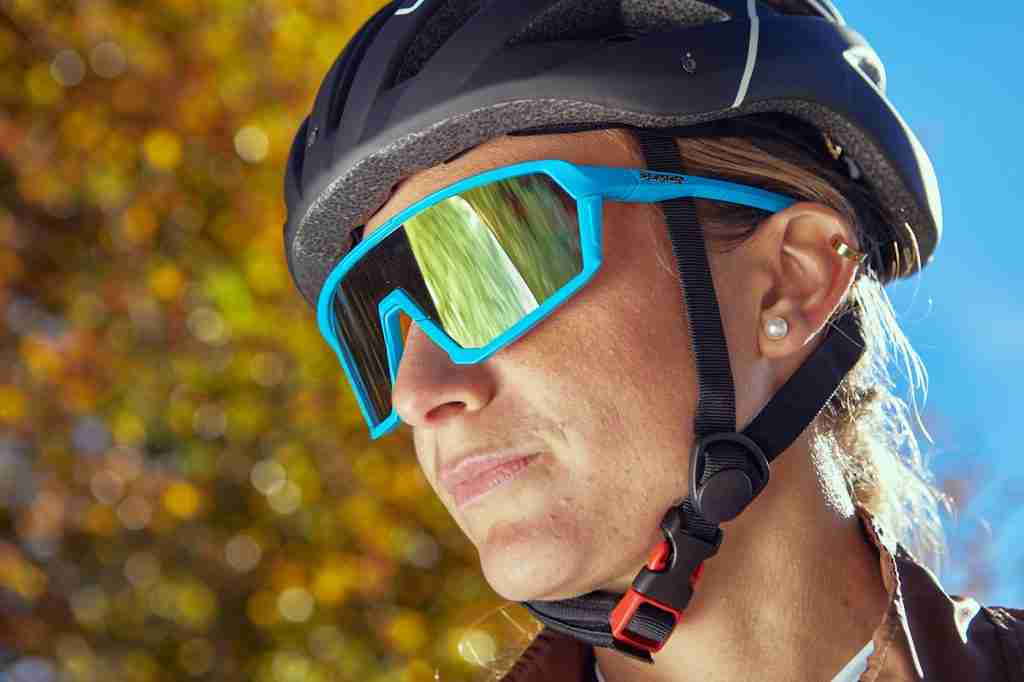
Wearing cycling glasses over or outside the helmet straps
Wearing cycling glasses over the helmet straps means the temples of the frame pass outside the straps rather than between the straps and your head. “Over the straps” and “outside the straps” describe the same basic setup.
It is the position most strongly associated with road cycling, but its practical advantages matter more than the convention itself.
Why many cyclists wear glasses over the straps
- The helmet straps remain independent from the glasses: the straps can sit against the side of the head without directly trapping the temples underneath them.
- The glasses are easier to remove: you can normally take them off without disturbing the helmet straps, useful at stops or when conditions change.
- There may be less pressure on the temples: the strap is not pressing directly onto the eyewear arm, which can improve comfort on long rides.
- Adjustment is usually simpler: small changes to the position of the glasses do not require moving the helmet straps.
When wearing glasses outside the straps does not work well
- The temples are pushed noticeably outward: the helmet or straps may be too close to the frame for that combination to work naturally.
- The straps are being pulled or displaced: eyewear should not distort the route or tension of a correctly adjusted helmet strap.
- The glasses become unstable: if the frame slides or bounces, do not compensate by overtightening the helmet.
- The temple tips hit the helmet retention system: long eyewear arms and some rear adjustment cradles can occupy the same space.
Outside the straps is a useful default to test first, not a rule that should be forced onto every helmet, head shape and pair of cycling glasses.
Wearing cycling glasses under or inside the helmet straps
Wearing the glasses under the helmet straps places the temples between the side of your head and the straps. “Under” and “inside” are often used interchangeably when cyclists discuss this position.
It can work well with some helmets and frames, but only if the straps remain correctly positioned and the extra layer does not create uncomfortable pressure.
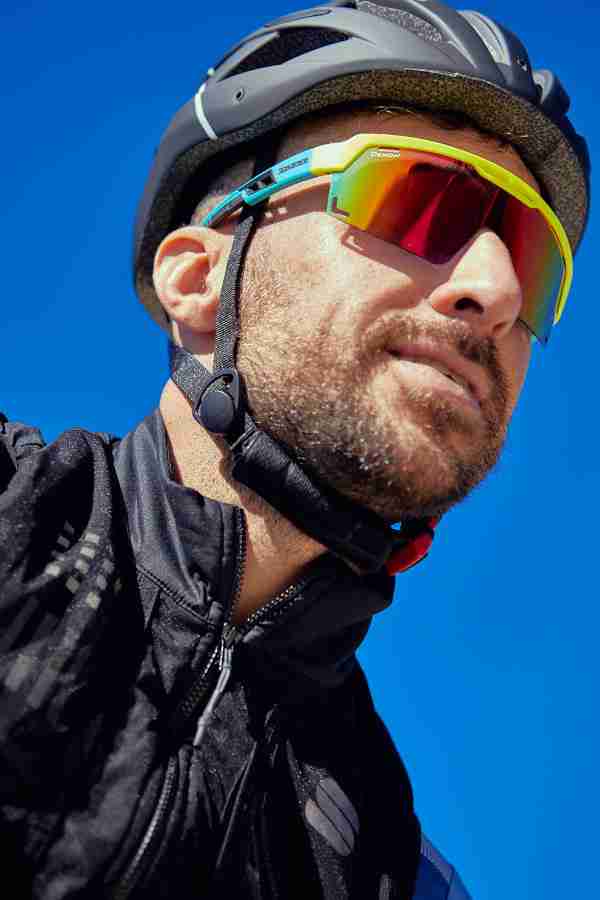
When the inside position can make sense
- Your particular frame sits more naturally underneath: some temple shapes simply interact better with a specific helmet in this position.
- The outside position pushes the frame arms outward: changing the layering can sometimes remove that interference.
- You wear everyday prescription glasses: depending on their shape and how often they need to remain on when the helmet is removed, the under-strap position may be more practical.
- The complete system remains stable: if the helmet stays correctly positioned and the straps remain flat, the arrangement may work perfectly well.
What to check carefully
- Pressure on the temples: the strap can press the frame arm into the side of the head, especially with thick or rigid temples.
- Strap distortion: the frame should not make the straps twist, bow outward or change position around the ears.
- Removal becomes less immediate: the glasses are partly trapped by the straps, so taking them off can require more care.
- Do not use strap tension as a clamp: the helmet straps should secure the helmet, not compensate for cycling glasses that otherwise do not fit.
Wearing cycling glasses under the straps is not automatically incorrect. It becomes a poor setup when it introduces pressure or changes the way the helmet is designed to sit and fasten.
Cycling glasses over vs under helmet straps
The differences are mostly about interaction between the helmet and eyewear rather than one position being universally superior. Use the comparison below as a fit guide, then test the result with your own equipment.
What if your cycling glasses press into the helmet or do not fit?
A pair of cycling glasses and a helmet can each fit well on their own yet interfere when worn together. The problem is often the geometry of the complete system: frame width, temple thickness and length, strap position, helmet shell shape and the rear retention cradle all occupy limited space around the head.
If your cycling glasses press into the helmet, feel uncomfortable under the straps or sit differently as soon as you put the helmet on, identify where the contact occurs before trying to solve it by tightening anything.
DEMON Technical Note: helmet–eyewear compatibility is a three-dimensional fit problem. A frame can fit your face perfectly and still be a poor match for a particular helmet because the temples, straps and retention system compete for the same space.
If frame height is the main issue, it can also help to understand the practical differences between mask-style and traditional cycling glasses .
How to choose the right helmet-and-glasses setup
Do not decide only by copying what professional riders do or by assuming one cycling discipline requires one position. Start with helmet fit, then evaluate how the glasses interact with it.
Start with the glasses outside if:
- The helmet straps remain flat and correctly positioned
- The frame temples are not pushed outward
- The glasses stay stable without help from the helmet
- You want easy removal and adjustment
- You have no contact with the helmet shell or retention cradle
Try the glasses inside if:
- The outside position creates obvious interference
- The frame sits naturally under the straps without pressure
- The straps remain flat and correctly adjusted
- Your prescription frame is more practical in this position
- The helmet remains level, snug and unchanged
If neither position works comfortably, the answer is not to force one of them. The helmet and eyewear may simply be a poor combination, and changing the frame or helmet geometry can be the better solution.
How to test cycling glasses with your helmet before a ride
A short fit test can reveal most compatibility problems before they become distracting several kilometres into a ride.
Fit the helmet first
Put on and adjust the helmet according to its manufacturer's instructions before adding the glasses. Do not alter an otherwise correct helmet setup simply to make space for eyewear.
Test the glasses over the straps
Put the glasses on in the outside position. Check whether the temples stay in their natural line instead of being pushed sideways by the helmet or straps.
Test the inside position if necessary
If the outside position creates interference, try the glasses beneath the straps and check carefully for pressure or strap distortion.
Adopt your actual riding posture
Lean forward as you would on the bike and look ahead. Helmet position and frame clearance can feel different in a riding posture than when standing upright.
Move your head and check the complete system
Look left, right, up and down. Make sure the frame stays stable, your field of vision remains clear and nothing digs into the temples or behind the ears.
Recheck after a short ride
A setup that feels acceptable for thirty seconds may reveal pressure or movement after riding. Recheck comfort and stability before committing to a long session.
Common mistakes when wearing cycling glasses with a helmet
Most problems are not caused by choosing the “wrong” side of the straps. They come from forcing two pieces of equipment to work together when their geometry or adjustment is incompatible.
- Tightening the helmet to stop loose glasses: the helmet should not be used as a clamping system for eyewear that does not fit securely by itself.
- Choosing convention over comfort: wearing the glasses outside because it looks more “correct” is pointless if it creates pressure or interference.
- Twisting straps around the temples: straps should not be deliberately wrapped, folded or rerouted around the glasses to hold them in place.
- Allowing the rear retention system to push the frame forward: check for contact behind the ears, especially with long temples.
- Changing helmet position to make room: raising, tilting or loosening a correctly fitted helmet to accommodate glasses solves the wrong problem.
- Ignoring small pressure points: minor pressure at the start of a ride can become significant discomfort over time.
Another common habit is putting sunglasses into the helmet vents when they are not being worn. That is a separate fit and storage question, covered in our guide to storing cycling glasses in helmet vents .
FAQ: cycling glasses and helmet straps
Should cycling glasses go over or under helmet straps?
Wearing cycling glasses over or outside the helmet straps is the common starting point, especially in road cycling. However, the correct position is whichever allows the helmet to remain properly fitted while keeping the glasses stable and comfortable.
Why do cyclists wear glasses over helmet straps?
The outside position is a long-established cycling convention and also makes the glasses easier to remove without disturbing the helmet straps. It can additionally prevent the straps from pressing directly onto the temples of the frame.
Is it wrong to wear cycling glasses under the helmet straps?
No. Wearing glasses under the straps can work if it is comfortable and the frame does not twist, displace or interfere with the correctly adjusted helmet straps. Fit is more important than appearance.
Should MTB glasses be inside or outside helmet straps?
Mountain biking does not create a universal inside-or-outside rule. Helmet design, frame shape, head shape and riding conditions all affect compatibility. Test both positions and use the one that keeps the helmet correctly fitted while the glasses remain stable.
What if my cycling glasses press into my helmet?
Identify where the contact occurs. Common interference points include the helmet shell, straps and rear retention cradle. Try the alternative layering position without changing correct helmet fit. If pressure remains, the helmet and frame geometry may simply be incompatible.
Why are my sunglasses uncomfortable under my helmet?
Discomfort often comes from several components overlapping in the same area: eyewear temples, straps and retention hardware. Check for pressure behind the ears and at the temples, then test another eyewear position or frame geometry rather than overtightening or loosening the helmet.
Can helmet straps be used to hold cycling glasses in place?
The helmet straps may influence how the glasses feel, particularly when the temples are underneath them, but they should not be used to compensate for eyewear that is otherwise unstable. The glasses should fit securely without requiring excessive strap pressure.
What about prescription glasses under a cycling helmet?
Everyday prescription glasses may fit more naturally underneath the straps with some helmets, particularly when they need to stay on after the helmet is removed. The same rule still applies: the glasses must not compromise correct helmet position or strap adjustment.
Should cycling glasses touch the helmet?
Occasional very light proximity is different from the helmet actively pushing the glasses out of position. If contact changes frame alignment, creates pressure, pushes the glasses down your nose or affects helmet fit, the combination should be adjusted or reconsidered.
So, should cycling glasses be over or under helmet straps?
For most cyclists, over or outside the helmet straps is the best position to try first. It is the common cycling convention, makes eyewear easier to remove and generally keeps the helmet straps independent from the glasses.
But it is not a universal rule. If your glasses are pushed outward, hit the helmet, interfere with the retention system or become uncomfortable, test the under-strap position. If that creates pressure or changes strap position, do not force that setup either.
The final decision should be based on four things: correct helmet fit, eyewear stability, clear vision and long-ride comfort.
If neither position achieves all four, the issue is probably not whether the temples are inside or outside the straps. The helmet and glasses may simply need a more compatible geometry.
↑ Back to the beginningReceive Your 15% Reward Coupon
Explore the Demon collection of cycling glasses for road cycling, mountain biking, gravel and everyday training.
Use the coupon code BLOG15 and receive 15% off your purchase.

Find cycling glasses that work with your ride
Compare cycling eyewear for road, MTB and gravel, and choose the frame and lens configuration that best suits your riding conditions.