


Sports Technology: How Innovation Is Changing Training, Performance and Competition
Sports technology now influences almost every part of modern sport. Artificial intelligence can help interpret performance data, wearable sensors can measure workload and movement, computer vision can analyse technique, virtual reality can simulate competitive situations, and connected equipment can generate information that once required a laboratory.
The important question is no longer whether technology belongs in sport, but where it genuinely improves decisions and where human judgement still matters. This guide explains the main technologies, how athletes and coaches use them, their limitations, and the developments shaping the next generation of sport.
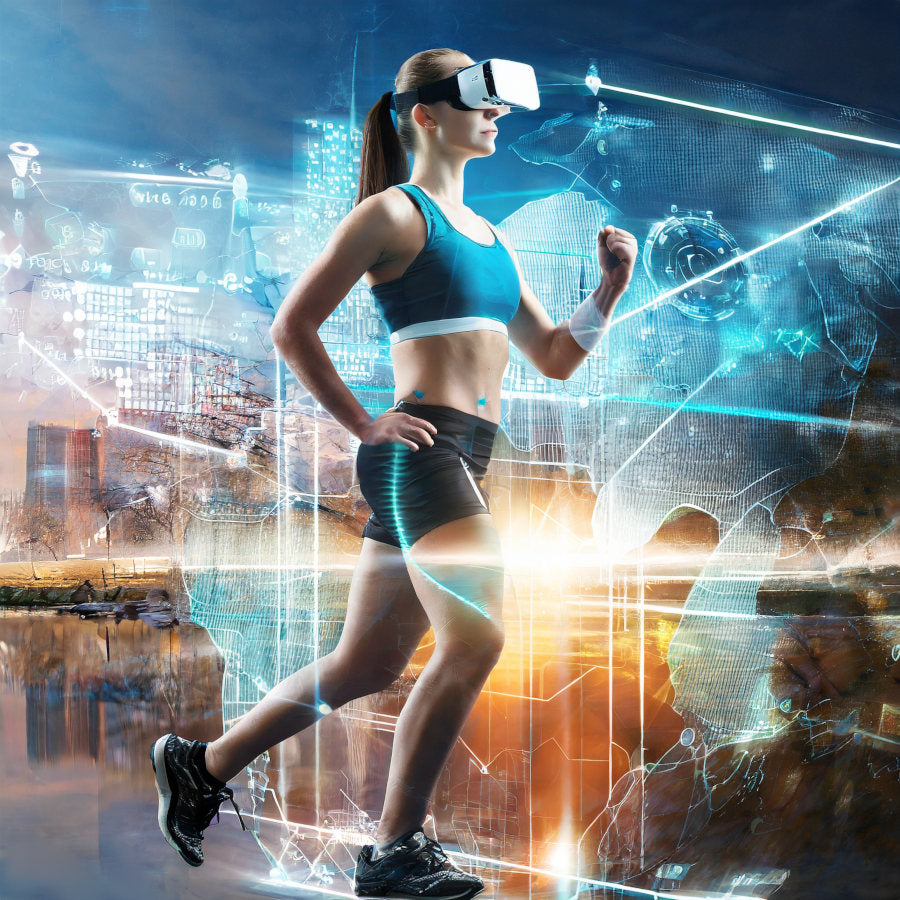
Explore the guide
Jump directly to the aspect of sports technology you want to understand.
What is sports technology?
Sports technology is the use of equipment, sensors, software, data systems and digital tools to support athletic performance, coaching, officiating, safety, equipment development and the experience of watching sport.
The definition is deliberately broad. A GPS unit worn by a football player is sports technology, but so are a high-speed camera used to analyse a sprinter, a smart cycling trainer, a video-refereeing system, a photochromic sports lens and an artificial-intelligence model that helps analysts find patterns in thousands of performance observations.
What connects these technologies is their ability to measure, process, simulate, adapt or communicate information that can influence sporting decisions. Some operate in the background, collecting data. Others interact directly with the athlete. Some exist primarily to help officials or broadcasters, while others are built into the equipment itself.
Sports technology turns aspects of performance that were once difficult to observe into information that can be measured, reviewed and acted upon. Its value depends less on how advanced the device looks and more on whether the information it produces improves a real decision.
Measure
Sensors and tracking systems quantify movement, load, speed, position, physiological signals and environmental conditions.
Analyse
Software and AI help organise large datasets and identify patterns that would be difficult to detect manually.
Visualise
Dashboards, video overlays, heat maps and 3D models make complex information easier to interpret.
Simulate
Virtual and augmented environments let athletes rehearse situations without recreating every physical condition.
Protect
Materials, protective equipment and monitoring systems can improve protection and awareness in demanding environments.
Decide
Technology can provide evidence to coaches, athletes and officials, while responsibility for interpretation remains human.
The main types of technology used in sport
Sports technology is easier to understand when it is organised by function rather than by individual device. Many products combine several categories: a wearable may contain sensors, generate data for an AI model and display its conclusions through a mobile application.
| Technology | What It Does | Typical Applications | Main Question to Ask |
|---|---|---|---|
| AI & machine learning | Finds patterns, classifies information and supports prediction or decision-making. | Performance analysis, tactical analysis, scouting, automated video processing. | Is the model using relevant, reliable data? |
| Wearable sensors | Collect data directly from an athlete or equipment. | GPS, heart rate, movement, acceleration, sleep and training-load monitoring. | Is the metric accurate enough for the decision? |
| Computer vision | Extracts information from images and video. | Movement tracking, technique analysis, tactical positioning, officiating support. | Can the system reliably recognise the relevant movement? |
| VR & AR | Creates simulated environments or overlays digital information onto the real world. | Decision training, reaction exercises, rehabilitation support, spectator experiences. | Does the simulation transfer to real performance? |
| Smart equipment | Integrates advanced materials, electronics or adaptive features into sporting gear. | Connected balls, bikes, rackets, footwear, protective equipment and eyewear. | Does the technology improve function without compromising usability? |
| Officiating technology | Provides additional evidence to officials. | Video review, goal-line systems, electronic line calling and offside technology. | Does it improve accuracy without unnecessarily disrupting competition? |
| Digital fan technology | Adds data, interaction and new viewing perspectives. | Real-time statistics, augmented broadcasts, personalised feeds and immersive viewing. | Does it add understanding or simply add more information? |
AI in sports: turning large datasets into usable information
AI is most valuable in sport when it helps people interpret more information than they could reasonably process by hand.
Modern teams and athletes can generate enormous amounts of data from GPS trackers, timing systems, video, force plates, training logs, physiological sensors and competition statistics. Collecting the information is only the first step. The more difficult problem is deciding what matters.
Machine-learning systems can classify movements, search video automatically, compare sessions, highlight unusual patterns and combine variables into models that support coaching decisions. In team sports, algorithms may help analyse positioning, passing networks, player movement or recurring tactical situations. In individual sport, they can be used to compare technique, workload and performance over time.
Where AI can help most
- Automating analysis: processing large amounts of video or tracking data faster than manual review.
- Pattern recognition: identifying relationships between variables across many training sessions or competitions.
- Personalisation: helping coaches compare an athlete's response with that athlete's own historical data rather than relying only on generic averages.
- Tactical preparation: organising information about opponents, formations, movement tendencies and game events.
- Communication: converting complex datasets into summaries and visualisations that are easier for athletes to understand.
A model can detect statistical relationships without understanding every aspect of an athlete's health, motivation, environment or tactical role. Good practice combines quantitative information with direct observation, athlete feedback and qualified professional judgement.

Why more data does not automatically mean better performance
One of the central problems in modern sports technology is information overload. Recording twenty metrics is easy; knowing which two should influence tomorrow's training session is much harder.
Data also needs context. A change in heart rate, running load, sleep estimate or movement pattern may have several possible explanations. Travel, illness, weather, stress, equipment, measurement error and changes in training can all affect the numbers.
This is why mature performance programmes generally focus on repeatable measurements, meaningful trends and questions that can actually be acted upon. A metric that looks sophisticated but never changes a decision has limited practical value.

Wearable technology in sports: measuring the athlete outside the laboratory
Wearables make continuous measurement possible during real training and competition environments, but every metric needs to be interpreted according to the device, sport and individual athlete.
GPS units, inertial measurement units, accelerometers, heart-rate monitors and other wearable sensors can provide information about what an athlete did and, in some cases, how the body responded.
For endurance athletes, a wearable may combine heart rate, speed, distance, elevation and training history. In team sports, tracking systems can estimate total distance, high-speed running, acceleration and positional movement. Other devices attempt to describe sleep, recovery or physiological readiness.
External load vs internal response
This distinction is important. External load describes the work performed: distance, speed, power, accelerations or repetitions. Internal response describes how the athlete responds to that work, using indicators such as heart rate, perceived exertion or other physiological measurements.
Two athletes can complete the same session while experiencing it very differently. Even the same athlete can respond differently on two separate days. Combining external and internal information can therefore provide more useful context than looking at a single number.
Measurement quality varies between devices and metrics. Distance may be highly useful in one context while sleep stages, calorie estimates or proprietary readiness scores may be less precise. Athletes should understand what a device actually measures before changing training because of its output.
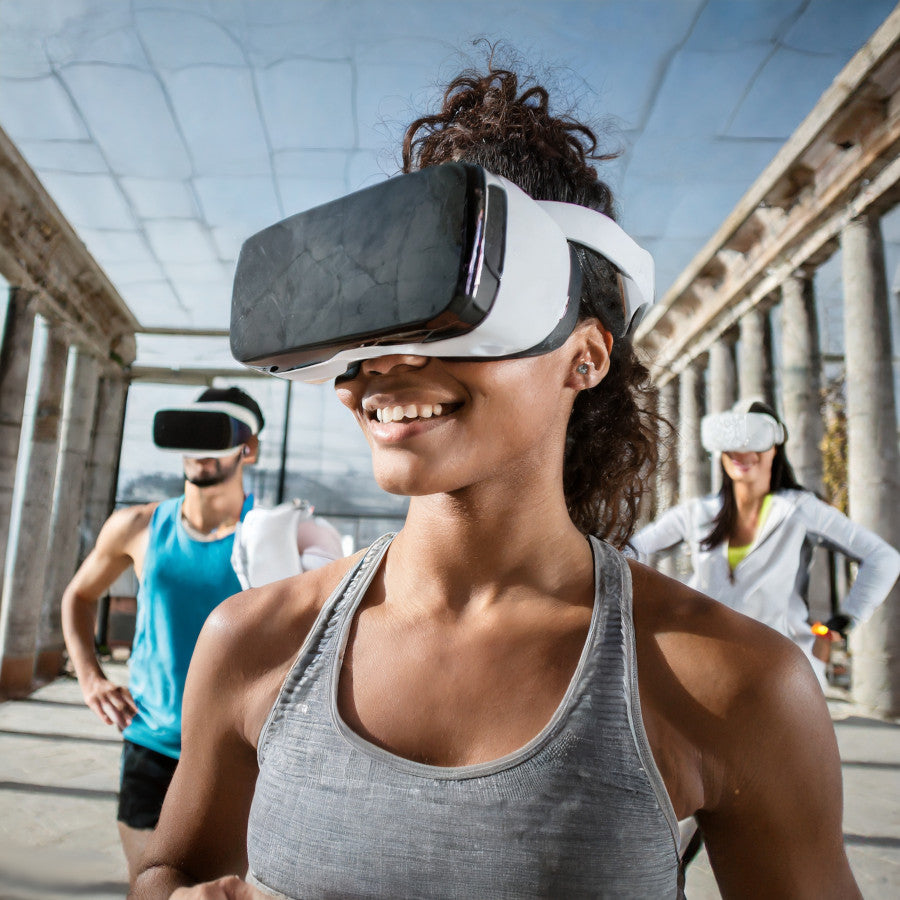
Virtual and augmented reality in sports training
Virtual reality can recreate visual and decision-making situations without requiring a full physical competition environment, while augmented reality adds digital information to a real training setting.
This creates an interesting opportunity in sports where perception and decision speed are critical. A player can be exposed repeatedly to tactical situations, ball trajectories or opponent movements while controlling the physical demands of the session.
VR can also make training scenarios easier to repeat. In normal practice, recreating exactly the same situation dozens of times may require several athletes, equipment and significant time. A simulation can present the same cue repeatedly and vary specific details systematically.
Research is encouraging in some areas, but VR should not be treated as a universal replacement for physical practice. Real sport contains forces, fatigue, touch, balance, weather, opponents and emotional pressure that simulations may reproduce only partially.
- Repeated decision-making scenarios without the full physical load of live play.
- Visual reaction and anticipation exercises.
- Tactical familiarisation with specific situations or environments.
- Controlled practice where physical repetition would be difficult or costly.
A realistic-looking simulation is useful only if the skills developed inside it transfer to the athlete's real sporting task.
Video analysis and computer vision: seeing performance frame by frame
Video remains one of the most useful sports technologies because it makes movement reviewable. Computer vision extends that value by allowing software to detect, track and classify what appears in the footage.
Traditional video analysis already gives coaches something the eye cannot provide during live action: the ability to pause, replay, compare angles and review a movement repeatedly. High-frame-rate recordings can reveal details of timing, positioning and technique that disappear almost instantly in competition.
Computer vision goes further. Algorithms can follow players, recognise body positions, track objects and transform video into structured data. In a team sport this may generate positional maps or movement sequences. In individual disciplines it can support biomechanical analysis, technique classification or automated timing.
Technique
Slow-motion and repeated comparison can expose changes in posture, timing, joint position or movement sequence.
Tactics
Tracking helps analysts examine spacing, formations, transitions, pressure and recurring patterns of play.
Automation
AI-supported systems can search long recordings and identify relevant events more efficiently.
The camera angle still matters
Automated analysis can look objective while still depending heavily on the quality of its input. Poor lighting, occlusion, camera movement, low resolution or an unsuitable viewing angle can reduce reliability. A sophisticated algorithm cannot recreate information that the camera never captured correctly.
The practical lesson is simple: technology does not eliminate the fundamentals of good measurement. Camera placement, calibration, consistent testing conditions and an understanding of measurement error remain important.
Technology is also changing how sporting decisions are made
Sports technology is not limited to athlete performance. Some of its most visible applications are designed to help officials answer questions that can be difficult to resolve accurately at full speed.
Football provides a clear example. Goal-line technology, video assistant referees and semi-automated offside systems use different combinations of cameras, tracking, software and human review. At the 2026 FIFA World Cup, advanced semi-automated offside technology was used alongside new analytical capabilities for participating teams, illustrating how officiating and performance technology are increasingly developing together.
Comparable developments exist across other sports through electronic line calling, timing systems, photo finishes, sensor-based measurement and video review.
What technology does well
It can provide additional viewpoints, precise timing, repeatable measurement and access to details that are impossible to assess reliably with the naked eye.
What remains difficult
Not every decision is purely geometric. Many rules still require interpretation, context and judgement, which is why human officials remain central even when technology supplies evidence.
Smart equipment: when the technology becomes part of the gear
Some sports technology sits on a screen. Other technology is built directly into the shoe, bike, ball, racket, helmet, eyewear or protective equipment used during activity.
Sensors can turn previously passive equipment into a source of information. Connected cycling systems can measure power and cadence. Instrumented equipment can record movement or impact. Advanced footwear can combine engineered foams, plates and geometry to influence mechanical behaviour. Protective products can use lighter materials, improved ventilation and impact-resistant structures.
Innovation does not always require electronics. Material science is one of the most important but sometimes overlooked areas of sports technology. Lower weight, controlled flexibility, impact resistance, thermal management, aerodynamic development and optical performance can all change how equipment behaves.
Sports eyewear is also a technology platform
Technical sports glasses illustrate this broader definition. The useful technology may be in the lens material, optical filter, photochromic reaction, polarisation, frame geometry, ventilation or impact resistance rather than in a battery or processor.
For outdoor athletes, eyewear must manage several problems simultaneously: ultraviolet exposure, wind, dust, insects, glare, changing light and physical stability during movement. Different lens technologies solve different problems, so the most advanced option is not automatically the right one for every environment.
- Photochromic lenses adapt their tint as outdoor light and UV exposure change.
- Polarised lenses can reduce reflected glare from surfaces such as water, wet roads and snow.
- Mirrored lenses help manage intense visible light and reflections in bright environments.
- Impact-resistant polycarbonate lenses combine low weight with strong resistance for dynamic sports use.
- Wraparound geometry can improve lateral coverage from wind, debris and environmental exposure.
The best sports equipment is not necessarily the product with the most electronics. A meaningful innovation solves a specific sporting problem while remaining comfortable, reliable and practical in the conditions where the athlete actually uses it.
Sports technology is changing what fans see as well
Much of the same data collected for teams and officials can be transformed into information for spectators. Live tracking, augmented graphics, probability models, player statistics and alternative camera views can explain parts of a contest that previously remained invisible.
The most useful broadcast technology gives context rather than simply filling the screen with numbers. Showing an athlete's speed at a decisive moment, comparing racing lines or visualising team shape can help spectators understand why an event unfolded as it did.
Personalisation is likely to become increasingly important. Different viewers may want different levels of information: a casual fan may prefer a clean broadcast, while an experienced cyclist, football analyst or motorsport enthusiast may want detailed real-time performance data.
More information is valuable only when it makes the sport easier to understand, more engaging or more accessible.
Benefits and limitations of sports technology
Technology can make sport more measurable and informed, but it also introduces new problems. A balanced assessment requires looking at both sides.
Potential benefits
- More objective measurement of selected aspects of training and competition.
- Faster analysis of large volumes of data and video.
- Better long-term tracking of individual performance trends.
- More repeatable technique and tactical review.
- Additional evidence for coaches and officials.
- Greater ability to personalise training to the individual athlete.
- Improved understanding of equipment behaviour and environmental demands.
Potential limitations
- Measurement error can create misleading conclusions.
- Proprietary scores may hide how a result was calculated.
- Too many metrics can distract from the variables that actually matter.
- Expensive technology can increase inequality between athletes and organisations.
- Continuous monitoring creates questions about data ownership and privacy.
- Models may perform poorly when applied outside the population or conditions on which they were developed.
- Blind trust in technology can weaken rather than improve decision-making.
Can sports technology prevent injuries?
This is an area where language needs to be precise. Monitoring workload, movement and physiological signals may help coaches recognise changes that deserve attention and can support broader risk-management strategies. That is different from predicting with certainty whether an individual athlete will be injured.
Injury is influenced by many interacting factors, including previous injury, exposure, training, recovery, biomechanics, competition demands and individual circumstances. A dashboard can contribute information, but it cannot reduce this complex problem to one universal readiness score.
Can a wearable tell you exactly how recovered you are?
Wearables can provide useful indicators and long-term trends. They cannot directly measure every component of recovery. Sleep estimates, heart-rate-derived metrics and proprietary readiness scores should therefore be considered alongside subjective feedback, performance observations and the training context.
What about privacy?
Athlete data can be unusually sensitive because it may reveal information about physical condition, training availability and performance. Organisations need clear rules covering who collects the information, why it is collected, who can access it, how long it is retained and whether the athlete can meaningfully control its use.
How to decide whether a sports technology is actually useful
Athletes do not need every available metric. Before buying or implementing a new system, start with the sporting problem rather than the product specification.
Define the decision you want to improve
Do you need to monitor training load, analyse technique, improve visibility, understand pacing, study tactics or reduce uncertainty around a specific performance question? If the problem is unclear, the technology is unlikely to solve it.
Understand what is actually being measured
Distinguish direct measurements from calculated estimates. Speed measured from a sensor and a proprietary “recovery score” are not the same type of information.
Check reliability and repeatability
A metric is more useful when repeated measurements are reasonably consistent under similar conditions. If the number changes dramatically because of device placement or environmental noise, interpretation becomes difficult.
Ask whether the information changes an action
Data becomes valuable when it informs training, technique, equipment choice or another real decision. Information that is interesting but never actionable can become a distraction.
Consider the cost of using it properly
The purchase price is only one part of the cost. Setup, calibration, software subscriptions, analysis time, staff training and data management can matter just as much.
Keep the athlete in the loop
The person performing the sport should understand what is being measured and why. Technology works best when athletes see it as a useful source of feedback rather than surveillance or an unexplained score.
You do not need a professional sports lab to benefit from technology
Elite sport attracts attention because teams can use advanced tracking systems, dedicated analysts and specialised laboratories. Recreational athletes face a different question: which technologies provide enough useful information to justify their complexity?
A cyclist may gain more from consistently recording power, heart rate and perceived exertion than from adding several poorly understood metrics. A runner may benefit from tracking pace and training consistency before worrying about a complex predictive model. A hiker may find reliable navigation, weather awareness and appropriate eye protection more valuable than detailed performance analytics.
The principle is the same at every level: select technology according to the decision it helps you make.
| User | Useful Starting Point | Possible Next Step | Common Mistake |
|---|---|---|---|
| Recreational runner | Time, pace, distance, perceived effort | Heart-rate trends and structured training | Changing training because of one isolated readiness score |
| Cyclist | Route, speed, heart rate or power | Training-load analysis and structured intervals | Collecting data without reviewing long-term trends |
| Team athlete | Training log and session feedback | GPS, video and tactical analysis | Comparing players without considering different roles |
| Outdoor athlete | Navigation, weather, visibility and protection | Activity-specific sensors or adaptive equipment | Prioritising electronic features over comfort and reliability |
The future of sports technology will be more connected, not simply more digital
The next major change is likely to come from integration. At present, athletes often use separate platforms for training, video, physiological monitoring, equipment and competition data. Increasingly, those systems can be combined so that information from one source provides context for another.
AI will make this integration easier because it can organise multiple data streams and surface patterns without requiring athletes to inspect every graph individually. Computer vision may reduce the need for dedicated tracking hardware in some applications. Wearable sensors will continue to become smaller and less intrusive. Equipment can become a source of data without visibly changing how athletes interact with it.
At the same time, governance will become more important. Sporting organisations must decide which innovations are acceptable, whether they preserve fair competition, how athlete data can be used and where automated decisions require human oversight.
Multimodal analysis
AI systems will increasingly combine video, movement, physiological and contextual data rather than analysing each source independently.
Less visible sensors
Measurement can become embedded in equipment and clothing instead of requiring additional devices.
Real-time feedback
The delay between an event, its analysis and useful feedback will continue to shrink.
Personalisation
Systems can increasingly compare athletes with their own history, conditions and response patterns.
Governance
Privacy, fairness, explainability and access will become central questions as adoption increases.
Human oversight
Better automation will make informed human judgement more important, not irrelevant.
What the current evidence tells us
Recent sports-science literature reflects both the potential and the limitations of digital innovation. Research on AI and wearables describes growing possibilities for athlete monitoring and performance management while emphasising contextual interpretation, transparency, privacy and the risks of over-reliance on automated outputs.
Research into virtual reality is similarly promising but sport-specific. Controlled studies have reported positive effects in selected performance tasks, while researchers continue to highlight the need for larger and more consistent evidence across different sports and training environments.
At institutional level, international sporting bodies are also treating artificial intelligence and advanced officiating systems as strategic issues. The direction of travel is clear: technology is becoming more capable, but responsible integration is now part of the performance question itself.
Frequently asked questions about sports technology
What is sports technology in simple terms?
Sports technology is any equipment, software, sensor, material or digital system designed to support sport. It can help measure performance, analyse technique, monitor training, improve equipment, support officials or enhance the spectator experience.
What are examples of technology used in sports?
Common examples include GPS trackers, heart-rate monitors, power meters, high-speed cameras, computer-vision systems, video review, virtual reality, smart trainers, connected sporting equipment, advanced lens technologies and artificial-intelligence tools for analysing performance data.
How is AI used in sports?
AI can organise and analyse large datasets, automate video analysis, identify movement or tactical patterns, classify events and help coaches interpret performance information. Its outputs should normally support rather than replace professional judgement.
How do wearable devices help athletes?
Wearables can track variables such as position, speed, acceleration, distance, heart rate and movement. Reviewing these measurements over time can help athletes and coaches understand workload, performance trends and the response to different types of training.
Can wearables predict injuries?
They can contribute information relevant to workload and athlete monitoring, but injury is influenced by many interacting factors. A wearable or algorithm should not be treated as a system that can predict individual injuries with certainty.
Is virtual reality effective for sports training?
VR can be useful for selected perceptual, decision-making and technical tasks, and research has shown promising results in some sports. It works best as a complement to real practice because a simulation cannot reproduce every physical and psychological demand of competition.
Does sports technology replace coaches?
No. Technology can supply measurements and analysis, but coaches still need to interpret the information within the athlete's technical, tactical, physical and psychological context. Communication and judgement remain essential.
What is computer vision in sport?
Computer vision is the use of software to extract information from images or video. Sports applications include player and object tracking, movement analysis, automated event recognition, tactical analysis and support for officiating systems.
What is smart sports equipment?
Smart sports equipment combines sporting function with advanced materials, sensors, electronics or adaptive technologies. Examples range from connected bikes and instrumented balls to impact-resistant protective gear and technical eyewear with specialised lens technologies.
What should I look for before buying sports technology?
Start by defining the problem you want to solve. Then consider measurement accuracy, reliability, comfort, ease of use, data privacy, long-term costs and whether the information will actually influence a useful decision.
The best sports technology makes better decisions possible
Sports technology is moving far beyond simple activity tracking. Artificial intelligence can process complex datasets, wearables can monitor athletes in real environments, computer vision can transform video into measurable information, virtual reality can create repeatable training situations and smart equipment can combine materials, design and sensors in ways that directly affect sporting use.
None of these technologies is automatically valuable. Their usefulness depends on the quality of the measurement, the sporting question being asked and the judgement used to interpret the result.
For professional teams and everyday athletes alike, the strongest approach is therefore selective rather than maximalist: measure what matters, understand the limitations of the data and use technology where it makes training, equipment choice, competition or the sporting experience meaningfully better.
↑ Back to topReceive Your 15% Reward Coupon
Explore DEMON sports glasses designed for outdoor activity, protection, visual comfort and changing sporting conditions. Use the blog reward code below to receive 15% off your next purchase.
Apply the code at checkout to receive your discount.