


How to Properly Clean Your Ski Goggles
Whether you have spent a full day on the slopes, crossed fresh snowfall, or carried your goggles inside a backpack with gloves and gear, dirt and moisture can quickly build up on the frame, foam, strap, and lenses.
Cleaning ski goggles correctly is essential to preserve clarity, anti-fog performance, comfort, and durability. The wrong method can scratch the lens, damage mirror coatings, weaken the foam, or allow moisture to enter the double-lens structure.

The safest way to clean ski goggles
Ski goggles are not cleaned like ordinary sunglasses. The lens may have anti-fog treatments, mirror coatings, ventilation holes, and a sealed double-lens construction. For this reason, the safest approach is to clean gently, use very little moisture, and never soak any part of the goggles.
| Part of the goggles | Best cleaning method | What to avoid |
|---|---|---|
| Plastic frame | Soft microfiber cloth, slightly damp if needed. A very small amount of isopropyl alcohol may be used on the cloth for the frame only. | Abrasive sponges, aggressive chemicals, soaking. |
| Foam padding | Lightly wipe the surface with a barely damp microfiber cloth. | Too much water, rubbing hard, washing under a tap. |
| Elastic strap | Gently wipe with microfiber and allow it to dry naturally. | Hot dryers, strong detergents, leaving it wet. |
| Lens | Use a clean microfiber cloth and minimal moisture. For vented lenses, apply liquid to the cloth, not directly to the lens. | Alcohol, paper, cotton cloths, rough rubbing, excessive pressure. |
Cleaning the Frame of Your Ski Goggles

Start with the most resistant part
The plastic frame is generally the easiest part to clean because it is more resistant than the lens and foam. Dirt, snow residue, dust, and fingerprints can usually be removed with a soft microfiber cloth.
If the frame has stubborn marks, lightly dampen the cloth with water. For tougher stains on the frame only, you may use a small amount of isopropyl alcohol on the cloth and gently wipe the affected area.
Do not pour liquid directly onto the goggles. Keeping moisture controlled helps protect the foam, lens edges, and any glued components.
Cleaning the Foam on Ski Goggles

Use very little moisture
The foam that rests against the face is essential for comfort, fit, and protection from wind and snow. It is also delicate because it is attached to the frame with adhesive.
To clean it, lightly moisten a microfiber cloth and wipe only the surface of the foam. The goal is to remove sweat, oils, and light dirt without soaking the padding.
Excess moisture can weaken the adhesive and may cause the foam to detach, lose shape, or deteriorate faster.
Cleaning the Elastic Strap of Ski Goggles

Keep the strap clean and elastic
The strap is durable, but it still absorbs sweat, dust, and moisture. Regular cleaning helps maintain hygiene and keeps the strap flexible over time.
Wipe the surface with a microfiber cloth slightly dampened with water. If needed, use a minimal amount of isopropyl alcohol on the cloth, then let the strap air dry completely before storing the goggles.
Avoid soaking the strap or drying it with direct heat, as this can reduce elasticity and weaken the materials.
This is one of the fastest ways to damage the foam and compromise the lens. Water can enter areas that are difficult or impossible to dry properly, especially around the lens edge and ventilation structure.

How to Clean the Lens of Your Ski Goggles
The lens is the most important and most delicate part of your ski goggles. It is responsible for clear vision, contrast, glare control, and protection from wind, snow, and UV rays. Cleaning it correctly helps preserve mirror coatings and anti-fog performance.

Understand the double-lens structure
Many ski goggles use a double-lens system. This construction works like a sealed sandwich: two lenses are bonded together to improve insulation and reduce fogging.
Because the lenses are sealed, you should never try to open them for internal cleaning. If water or cleaning liquid enters the space between the two lenses, it may leave marks, create fogging, or permanently affect visibility.
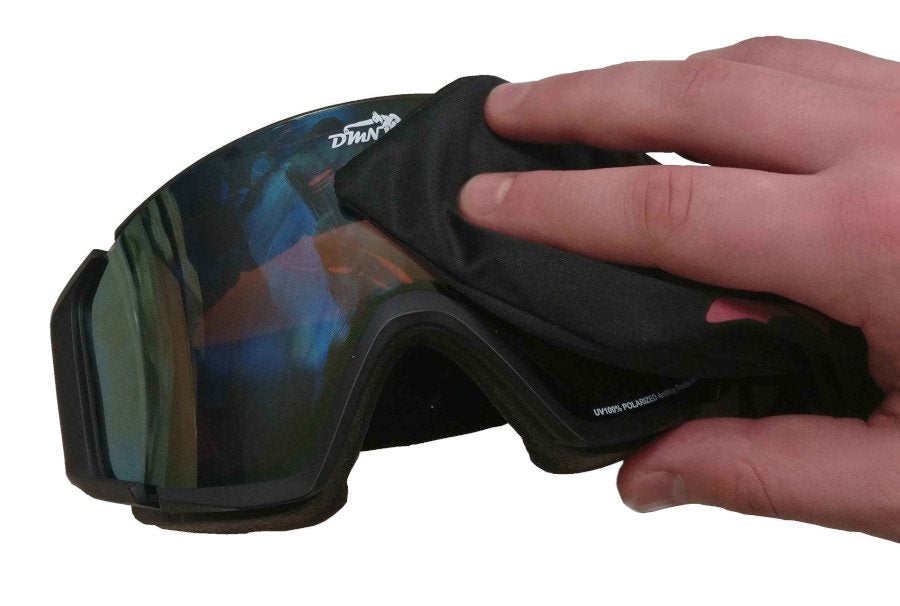
Always focus on cleaning the outer surface gently, using a clean microfiber cloth and only the minimum amount of moisture required.
Remove loose snow first
Shake off snow or let ice soften naturally. Do not scrape frozen particles across the lens.
Use a clean microfiber cloth
A dirty cloth can hold dust or grit that may scratch the surface.
Apply light pressure only
Gentle circular or straight movements are enough. Heavy rubbing can damage coatings.
Avoid Liquids Entering Ventilation Holes
Some ski goggle lenses have small ventilation holes or openings designed to help reduce fogging. These areas require extra attention because liquid can pass through them and reach the internal lens structure.
Lenses without ventilation holes
These lenses are easier to clean. For fingerprints or light dirt, breathe lightly on the lens to create a minimal amount of moisture, then wipe gently with a clean microfiber cloth.
For more stubborn stains, slightly dampen the cloth with water or use a dedicated anti-fog lens cleaning solution. Apply only a small amount and avoid excessive pressure.
Lenses with ventilation holes
Use a dry microfiber cloth whenever possible. If more cleaning power is needed, dampen the cloth first and then wipe the lens.
Do not spray liquid directly onto a vented lens. Spray the cleaner onto the microfiber cloth instead, then clean the lens gently while keeping liquid away from the holes.

When to use an anti-fog lens cleaner
A specific anti-fog cleaner can help remove dirt while supporting lens clarity. The safest method is to use it sparingly and apply it correctly according to lens type.
On lenses with ventilation holes, apply the product to the cloth first. On solid lenses, use only a light amount and wipe gently with microfiber.
View anti-fog cleanerRules for Safely Cleaning Ski Goggle Lenses
Lens coatings are designed to improve visibility and performance in snow conditions. To protect them, avoid aggressive cleaning methods and materials that may look harmless but can leave micro-scratches.
Alcohol-based cleaners can damage mirror treatments or anti-fog coatings. Use alcohol only on suitable parts such as the plastic frame, never on the lens.
Cotton and ordinary fabrics can be too rough for delicate lenses. They may trap small particles and drag them across the surface.
Paper towels, tissues, toilet paper, and wet wipes can leave streaks or micro-scratches, especially on mirrored or coated lenses.
What to do if the inside lens gets wet
If moisture gets on the inner side of the lens, avoid rubbing aggressively. The inner surface often has a delicate anti-fog treatment.
Let the goggles air dry naturally. If needed, gently dab the moisture with a clean microfiber cloth instead of wiping back and forth.
This reduces the risk of damaging the anti-fog coating and helps keep visibility clear during future use.
How to Properly Dry and Store Your Ski Goggles
Cleaning is only half of the process. Proper drying and storage are essential to keep the foam, strap, frame, and lens coatings in good condition.
Let them air dry naturally
Keep goggles away from radiators, fireplaces, hair dryers, direct sunlight, and other strong heat sources.
Store only when completely dry
Storing damp goggles can encourage unpleasant odors and may accelerate foam deterioration.
Use a microfiber bag or hard case
A protective case helps prevent scratches and protects the lens from pressure inside a backpack.
Keep them in a cool, dry place
Avoid extremely hot or cold environments when the goggles are not being used.
A key sign of poor storage is foam that begins to crumble, flake, or leave fragments on your face or hands. If the foam is deteriorating, the goggles may no longer fit comfortably or seal properly against wind and snow.
FAQ: Cleaning Ski Goggles
Can I clean ski goggles with water?
You can use a very small amount of water on a microfiber cloth, but you should never wash ski goggles directly under running water or soak them.
Can I use alcohol on ski goggles?
Alcohol may be used carefully on the plastic frame or strap, but it should not be used on the lens because it can damage coatings.
Can I wipe the inside of the lens?
If the inner lens is wet, dab it gently with microfiber and let it air dry. Avoid rubbing because the inner anti-fog treatment can be delicate.
What should I do if snow gets inside the goggles?
Remove loose snow gently, let the goggles dry naturally, and avoid rubbing the inner lens while it is wet. Once dry, use a clean microfiber cloth if needed.
How often should I clean my ski goggles?
Light cleaning after each use is ideal. A quick wipe of the frame, strap, and outer lens helps prevent dirt buildup and keeps the goggles ready for the next outing.
Discover the Demon Collection of Ski Goggles
Choose ski and snowboard goggles designed for clear vision, comfort, protection, and reliable performance on the slopes.
Use the coupon code BLOG15 and receive 15% off your purchase.