


Cycling Glasses: Should You Wear Them Inside or Outside the Helmet Straps?
One of the most common questions among cyclists is whether cycling glasses should sit inside or outside the helmet straps. Both methods can work well, but the best choice depends on comfort, stability, helmet fit, frame shape, and the type of riding you do.
Which position is better?
For many cyclists, wearing glasses outside the helmet straps feels more comfortable and makes the glasses easier to adjust or remove. For rough terrain, technical trails, jumps, or fast descents, wearing glasses inside the helmet straps can feel more secure because the straps help hold the temples closer to the head.
The important rule is simple: your glasses should never compromise the fit of your helmet. The helmet straps should remain flat, correctly adjusted, and comfortable around the ears and chin.
Practical verdict: if you ride mainly on the road or on smooth gravel, outside the straps is often the most comfortable option. If you ride technical MTB or downhill trails, inside the straps may provide a more locked-in feeling.
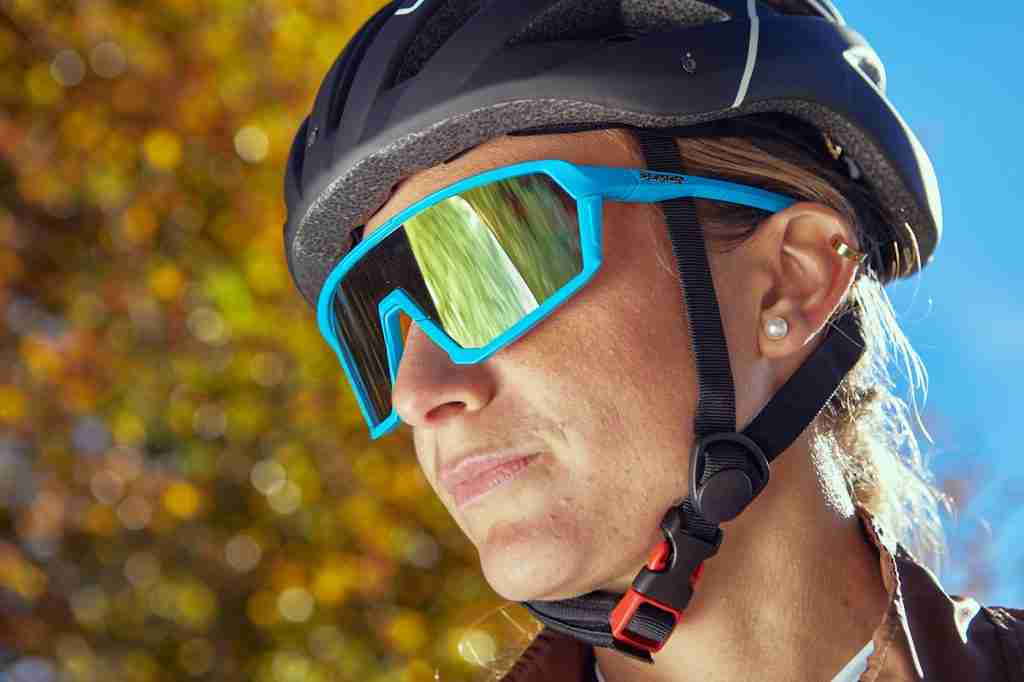
Wearing cycling glasses outside the helmet straps
Wearing glasses outside the helmet straps means the temples of the glasses sit over the straps rather than being tucked underneath them. This is a popular choice among riders who want fast adjustment, less pressure around the temples, and a cleaner separation between eyewear and helmet straps.
Main advantages
- More freedom of movement: the glasses are less constrained by the helmet straps, which can feel better with larger frames, thicker temples, or wraparound cycling glasses.
- Easier adjustment while riding: you can lift, tilt, or remove the glasses more quickly when lighting changes, during climbs, or at rest stops.
- Less pressure on the temples: because the straps are not pressing the glasses directly against the side of the head, this setup can feel more comfortable on long rides.
- Simple removal: if you need to take off your glasses, you can usually do it without loosening or moving the helmet.
Things to consider
- Less locked-in stability: on rocky trails, jumps, or very rough surfaces, the glasses may move more than they would inside the straps.
- Helmet movement matters: if your helmet shifts, the glasses may also shift because they are not being held as tightly by the strap system.
- Frame shape is important: glasses with very straight or slippery temples may need a careful fit check before fast descents or off-road riding.
Choose this setup if your priority is comfort, quick adjustment, and easy removal during road cycling, endurance rides, commuting, or casual gravel routes.
Wearing cycling glasses inside the helmet straps
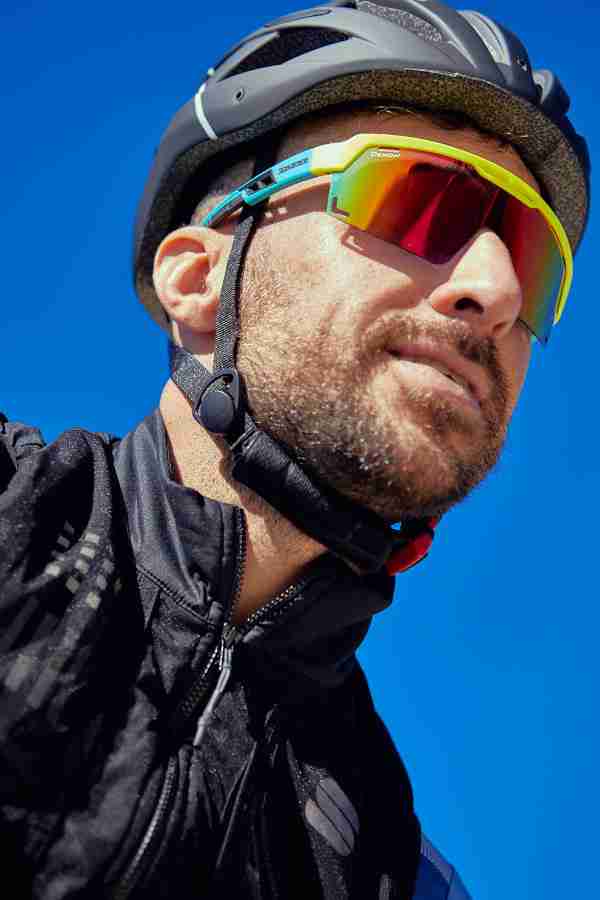
Wearing glasses inside the helmet straps means the temples are positioned between your head and the straps. This can create a more secure feeling because the straps help keep the glasses closer to the head.
This setup is especially appreciated by riders who face vibration, sudden movements, technical descents, or terrain where eyewear stability is more important than fast removal.
Main advantages
- Greater stability: the helmet straps can help reduce unwanted movement, keeping the lenses aligned with your eyes on rough roads or trails.
- Lower risk of slipping: when the ride becomes bumpy or technical, the glasses may feel more secure and less likely to bounce.
- Better integration with the helmet: some riders like the feeling of helmet and glasses working together as one stable system.
- Useful for demanding terrain: technical MTB, downhill, fast gravel, and high-speed descents can benefit from the extra hold.
Things to consider
- Possible pressure points: if the glasses temples are thick or rigid, the straps may push them against the head and cause discomfort over time.
- Less convenient adjustment: removing or repositioning the glasses can be slower because the helmet straps are holding them in place.
- Fit must be checked carefully: the glasses should not twist the straps, lift the helmet, or interfere with the chin strap adjustment.
Choose this setup if your priority is stability, especially for mountain biking, downhill routes, fast descents, or uneven terrain.
Inside vs outside helmet straps
The best position is not universal. The right setup is the one that keeps your vision clear, your helmet secure, and your glasses comfortable for the full duration of the ride.
The right setup depends on your riding style
The same pair of cycling glasses can feel different depending on helmet shape, strap angle, retention system, head shape, and the thickness of the glasses temples. For this reason, the most reliable choice comes from testing both positions in realistic riding conditions.
Choose outside the straps if you want:
- More comfort on long rides
- Less pressure around the temples
- Fast adjustment while riding
- Easy removal during climbs or stops
- A practical setup for road cycling or smoother gravel
Choose inside the straps if you want:
- More stability on rough terrain
- A more secure fit during descents
- Less movement from vibration
- Extra confidence on technical trails
- A setup suited to MTB, downhill, or aggressive gravel
Never force a position that creates discomfort. If the glasses pinch, lift the helmet, distort the straps, or sit too close to your eyelashes, adjust the setup before riding.
How to test your glasses and helmet fit before a ride
Before deciding which method is best, do a quick fit check. It takes less than a minute and helps you avoid discomfort, slipping glasses, or poor helmet positioning during the ride.
Put your helmet on first
Adjust the helmet correctly before adding the glasses. The helmet should sit level, stable, and comfortable.
Try the glasses outside the straps
Move your head side to side, look down, and simulate riding posture. Check if the glasses slide or bounce.
Try the glasses inside the straps
Repeat the same movements. Pay attention to pressure around the temples and whether the straps remain flat.
Check your field of vision
The frame should not block your view when you look forward, down at the road, or toward your handlebars.
Choose the setup that disappears
The best configuration is the one you stop noticing: stable, comfortable, and clear from the first kilometer to the last.
Common mistakes when wearing cycling glasses with a helmet
Small fit errors can create pressure, lens movement, or discomfort. These are the most common issues to check before riding.
- Twisted helmet straps: the straps should lie flat against the side of your face, not roll or twist around the glasses.
- Glasses sitting too low: if the glasses slide down the nose, they can reduce visibility and create distractions.
- Temples pressing into the head: pressure may feel minor at first but can become uncomfortable after many kilometers.
- Helmet retention system pushing the frame: some rear retention systems can change how the glasses sit, especially with long temples.
- Dirty lenses or poor lens choice: clear vision depends not only on fit, but also on lens cleanliness and the right lens for the light conditions.
FAQ: cycling glasses and helmet straps
Is it wrong to wear cycling glasses inside the helmet straps?
No. It is not wrong if the setup is comfortable and does not affect helmet fit. Many riders prefer this position because it can make the glasses feel more stable.
Is it wrong to wear cycling glasses outside the helmet straps?
No. This is a very common setup, especially for road cycling and long rides. It often makes glasses easier to remove and can reduce pressure around the temples.
Which setup is better for mountain biking?
For mountain biking, especially on technical trails, inside the straps can offer a more secure feel. However, if it creates pressure or discomfort, outside the straps may still be the better option.
Which setup is better for road cycling?
For road cycling, outside the straps is often preferred because it is comfortable, easy to adjust, and convenient during long rides or changing light conditions.
Can helmet straps damage cycling glasses?
If the straps press too hard against the frame or lenses, they may create marks or discomfort over time. A correct fit should keep the glasses stable without forcing the frame.
What matters most: comfort or stability?
Both matter. Comfort becomes essential on long rides, while stability becomes essential on rough terrain. The ideal setup gives you enough of both without compromising helmet position.
So, inside or outside the helmet straps?
There is no single rule that works for every cyclist. Wearing glasses outside the straps is usually more comfortable and convenient, while wearing them inside the straps can provide extra stability on demanding terrain.
The best solution is to test both configurations with your own helmet and glasses. Pay attention to pressure, lens stability, strap position, and how easily you can adjust the glasses while riding.
If the glasses remain stable, your vision is clear, and your helmet fit stays correct, you have found the right setup for your riding style.
↑ Back to the beginningReceive Your 15% Reward Coupon
Discover the complete Demon collection of cycling glasses designed for road cycling, mountain biking, gravel, and high-performance riding.
Use the coupon code BLOG15 and receive 15% off your purchase.

Find the right cycling glasses for your ride
Choose a model built for protection, comfort, visibility, and performance across road cycling, MTB, gravel, and long-distance rides.