
-
SPEED VENT
Vendor:Cycling Glasses with High Contrast Mirrored LensRegular price €69,90Regular priceUnit price per -
SPEED VENT
Vendor:Cycling Glasses with Photochromic Mirrored Lens DCHROM® Cat. 1-3Regular price €129,90Regular priceUnit price per -
SUPERPIUMA
Vendor:Cycling Glasses with High Contrast Mirrored LensRegular price €79,90Regular priceUnit price per


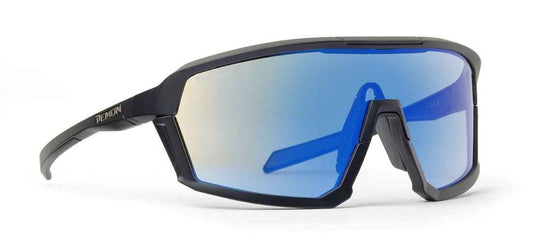


Collection: Mountain Bike Glasses
MTB Glasses
Mountain biking is more than just a sport it’s a lifestyle fueled by adrenaline, speed, and the thrill of conquering rugged trails. Whether it’s dust kicked up by jumps, rough vibrations from rocky terrain, or the rush of racing downhill, mountain bikers constantly seek ways to enhance their performance while staying safe.
Recognizing the unique demands of MTB riders, DEMON has developed a dedicated line of mountain biking glasses crafted with advanced materials and innovative technologies. These glasses are designed to ensure consistent visibility, maximum eye protection, and unmatched comfort, enabling riders to focus entirely on the trail ahead.
Regardless of experience level whether professional athletes or recreational enthusiasts every rider has four fundamental needs when it comes to eye protection:
DEMON MTB glasses are engineered with these four core principles, setting them apart from ordinary sports eyewear. They are true technical eyewear for mountain biking, combining safety, performance, and style in one precise design.

Why Are These Requirements So Important?
Mountain biking is an intense, high-speed sport that exposes riders to a variety of challenges and potential hazards. Every second counts when it comes to reaction time, visibility, and safety. This is why the design of specialized equipment, such as MTB glasses, is not just a matter of style it can significantly affect performance, comfort, and protection.
DEMON has carefully studied the needs of MTB riders to create eyewear that meets the exacting demands of the sport. The design of these glasses is based on four fundamental requirements, each addressing a critical aspect of the riding experience. Understanding why these requirements matter helps explain how DEMON MTB glasses provide both safety and enhanced performance:
On technical singletrack, the rider’s eyes are constantly scanning for roots, rocks, braking points, line changes, loose gravel, low branches, dust clouds, and sudden transitions between sunlight and shade. For this reason, mountain biking glasses should not be considered a simple accessory. They are part of the rider’s control system: they help maintain clearer perception of terrain detail, improve visual continuity at speed, and reduce distraction caused by glare, wind, or debris.
Professional-looking MTB eyewear should therefore combine three essential qualities at the same time: visual precision, reliable protection, and comfort that remains consistent even after long hours in the saddle. When one of these elements is missing, the riding experience becomes less fluid, less safe, and more fatiguing.


Perfect Visibility in Changing Light Conditions
Mountain biking is a dynamic sport that often requires riders to transition rapidly between areas of bright sunlight and deep shade. Trails may pass through dense forests, shaded valleys, tunnels, or tree-lined paths, creating constantly changing light conditions. These sudden shifts can force riders to slow down, hesitate, or even stop briefly to reassess the terrain ahead. Not only does this disrupt the flow of the ride, but it can also reduce safety and diminish overall enjoyment.
To address this challenge, high-performance MTB glasses are essential. The ideal solution is photochromic lenses, designed to automatically adapt to changes in light while providing exceptional eye protection.
Key Features of Photochromic Lenses:
- Material and Protection: High-quality photochromic lenses are typically made from polycarbonate, a virtually unbreakable material that delivers excellent optical clarity. They protect the eyes from airborne debris such as leaves, branches, stones, or even insects, which are common hazards on trails.
- Light-Adaptive Technology: Photochromic lenses undergo a chemical reaction when exposed to UV light, causing them to darken. When the rider enters a shaded area or tunnel, the lenses gradually return to a transparent state, ensuring clear vision without sacrificing protection. Exiting the shade prompts the lenses to darken again, reducing glare and eye strain. This continuous, automatic adjustment allows riders to maintain perfect and consistent visibility across varying light conditions.
Beyond light adaptation, excellent MTB visibility also depends on how stable the image remains while the trail becomes rough and fast. A technical lens should help the rider read terrain contrast more naturally, without creating visual interruptions that break concentration. This is especially important on rooty forest sections, rocky descents, and narrow trails where even a small delay in visual interpretation can affect line choice and confidence.
A wrap-around geometry also improves practical visibility in MTB because it increases protection on the sides and helps the rider maintain a broader, more controlled field of view. When the glasses sit properly under a helmet and stay aligned with the face, the trail remains easier to read even while the body is moving intensely through corners, drops, compressions, and repeated vibrations.
DCHROM Photochromic Lens
- This advanced lens features a slightly darker base tint that can reach category 3 darkness, similar to mirrored sunglasses, at peak sunlight exposure.
- It transitions rapidly between light and dark states, providing exceptional eye comfort and reduced fatigue, even in intense sunlight.
- Ideal for riders navigating mixed terrain, such as forests interspersed with open spaces, where lighter lenses alone may not suffice.
- While excellent for daytime use, it may become too dark for night riding, in which case a lighter option, such as the Smoke photochromic lens, is recommended.
For MTB riders who frequently alternate between exposed trails and shaded woodland, DCHROM represents a highly technical solution because it gives stronger light control in open sun while still preserving the adaptability needed on variable terrain. This helps the rider avoid constant visual strain and keeps concentration more stable on long rides, marathon efforts, and fast daytime descents.
By incorporating these advanced lenses, DEMON MTB glasses allow riders to focus entirely on the trail, reacting instinctively to obstacles without needing to squint or remove eyewear. The result is not only enhanced safety but also a more fluid, enjoyable riding experience, where changing light conditions no longer compromise performance.


Smoke Photochromic Lens
The Smoke Photochromic Lens offers a unique solution for mountain bikers who face varying and often low-light conditions. While it shares the same light-adaptive chemical technology as the DCHROM lens darkening when exposed to sunlight it differs significantly in its base tint and maximum darkness.
Unlike the DCHROM lens, which can reach a deeper, category 3 darkness at peak sunlight, the Smoke lens starts lighter and remains slightly less dark even at maximum activation. This makes it ideal for riders who need excellent visibility in situations where darker lenses could impede their view of the trail.
Ideal Use Cases:
- Dense Forests: Riders navigating long stretches of forested trails benefit from the Smoke lens because it maintains better clarity in shaded areas, allowing them to see roots, rocks, and other obstacles more clearly.
- Dawn and Dusk Rides: Low-light conditions at sunrise or sunset can make trail navigation challenging. The Smoke lens provides optimal visibility without compromising protection.
- Night Excursions: For evening or night rides, this lens offers a nearly transparent filter while still protecting the eyes from airborne debris such as dust, leaves, small branches, and insects.
By choosing the Smoke Photochromic Lens, MTB riders can maintain maximum situational awareness and eye protection without experiencing the drawbacks of lenses that become too dark in low-light conditions. This ensures a safer, smoother, and more enjoyable ride, regardless of the time of day or lighting conditions.
The real strength of this solution lies in versatility. For riders who spend much of their time in wooded environments, on cloudy days, or in the shoulder hours of the day, the Smoke lens preserves readability of terrain detail while still delivering the protection expected from technical MTB eyewear.
More Essential Benefits MTB Glasses Should Deliver
In addition to light adaptation, impact resistance, stability, and comfort, high-level mountain bike eyewear should support the rider in several other important ways. These elements are often what transform a pair of glasses from simply usable into genuinely performance-oriented technical eyewear.
Protection from wind, dust, and trail debris
At speed, even a small particle can break concentration or force an instinctive blink at the wrong moment. Technical MTB glasses help create a more controlled visual zone around the eyes, reducing disturbance from wind, dust, insects, and trail spray.
Wide field of view
Mountain biking requires fast reading of central and peripheral information at the same time. A broad lens shape helps maintain better awareness of corners, branches, side obstacles, and terrain changes without forcing constant head movement.
Helmet compatibility and fit consistency
Eyewear must work naturally with MTB helmets. When temple shape, nose support, and frame pressure are well balanced, the glasses remain secure without creating pressure points over long rides or technical descents.
Ventilation and anti-fog performance
Climbs, humidity, sweat, sudden stops, and temperature changes can all encourage lens fogging. A well-designed MTB frame should promote airflow around the lens area so vision remains clearer in changing effort levels and trail conditions.
Impact Resistance (Lenses)
A critical aspect of mountain biking eyewear is impact resistance, and the choice of lens material plays a pivotal role in ensuring the rider’s safety. Mountain biking is widely regarded as one of the most demanding cycling disciplines, where high speeds, rough terrain, and unpredictable obstacles make eye protection absolutely essential. To meet these challenges, DEMON MTB glasses are engineered with cutting-edge, shatterproof polycarbonate lenses, specifically designed to withstand even the most forceful impacts.
Why Polycarbonate Lenses Are Essential:
- Elasticity and Shock Distribution: The key feature of polycarbonate is its combination of strength, flexibility, and lightweight construction. In the event of a collision whether with a branch, stone, or debris the lens absorbs and distributes the force across its entire surface. This prevents dangerous fragments from breaking off, which could otherwise injure the eyes. Instead, the lens may deform slightly in a “cobweb” pattern, rendering it unusable but keeping the eyes safe.
- Durability and Safety: Unlike ordinary plastic or glass lenses, polycarbonate is specifically engineered to endure repeated impacts without shattering. This ensures the rider’s eyes are protected even in extreme conditions.
- Lightweight Comfort: Polycarbonate lenses not only maximize safety but also reduce the overall weight of the glasses, improving comfort during long rides and minimizing fatigue on the nose and ears.
Testing and Verification:
To guarantee maximum protection, DEMON lenses undergo rigorous testing. For instance, polycarbonate lenses were subjected to repeated high-impact strikes using a steel hammer, simulating real-world accidents. The results demonstrated exceptional resilience: the lenses did not shatter. Instead, they absorbed and distributed the impact energy, showing controlled deformation while fully maintaining their protective function.
This commitment to impact-resistant design reflects DEMON’s philosophy: safety is never optional. Every pair of MTB glasses in the collection is built with polycarbonate lenses that protect the rider’s eyes from injury, allowing athletes to push their limits with confidence.
For mountain biking, this kind of lens security is particularly valuable because impacts do not come only from crashes. They can come from branches at shoulder height, stones thrown up by a leading rider, or debris lifted by dry summer trails. Strong lens material therefore protects not only in exceptional moments, but also in the normal reality of off-road riding.


Impact Resistance (Frame)
Just as eye protection is critical, the frame of MTB glasses must also be engineered to withstand the rigors of mountain biking. Trails are unpredictable, with frequent falls, sudden collisions with branches, rocks, or debris, and rapid changes in terrain. To address these challenges, DEMON MTB glasses are constructed using TR90, a high-performance material that combines nylon and carbon fiber.
Why TR90 Is Ideal for MTB Glasses:
- Lightweight Construction: TR90 frames are approximately 20% lighter than traditional materials, reducing strain on the rider’s nose and ears and enhancing overall comfort during long rides. This lightweight design also contributes to improved stability, as the glasses move less during vigorous activity.
- Enhanced Impact Resistance: The combination of nylon and carbon fiber gives the frame remarkable elasticity and strength, allowing it to absorb shocks and resist deformation in the event of accidental impacts. Unlike brittle materials that may crack or break, TR90 frames can flex slightly, dissipating energy while maintaining structural integrity.
- Durability in Extreme Conditions: The nylon component ensures that the glasses remain stable and non-deformable across a wide range of temperatures. Whether riding in freezing alpine conditions or under intense summer heat, the frames retain their shape and performance.
- Longevity and Reliability: By using TR90, DEMON ensures that the glasses provide long-lasting durability, maintaining their protective qualities and ergonomic fit over time even after repeated impacts or mechanical stress.
For MTB, frame quality matters because the glasses are exposed to repeated micro-stresses even when there is no direct crash. Vibrations, pressure from helmet fit, repeated on-off use, and uneven trail impacts can all affect long-term stability. A frame that combines memory, flexibility, and resilience is therefore essential for dependable performance over time.

Maximum Stability of the Glasses
In mountain biking, stability is just as important as protection. Glasses that shift, slip, or move during a ride can be distracting, reduce visibility, and even create safety risks. DEMON MTB glasses are designed to offer maximum stability, combining advanced materials, ergonomic design, and precise construction to ensure they remain securely in place under the most demanding conditions.
Role of TR90 in Stability:
The TR90 frame plays a central role in maintaining a secure fit. Its combination of nylon and carbon fiber provides both flexibility and memory. When worn, the glasses naturally conform to the shape of the wearer’s head, offering a snug yet comfortable fit without feeling tight or constrictive. Once removed, the frame returns to its original shape, preserving its performance and longevity. This adaptability ensures that the glasses remain stable during high-speed descents, technical trails, and intense vibrations typical of mountain biking.
Enhanced Grip with Rubberized Megol Components:
To further improve stability, DEMON incorporates soft, non-slip Megol rubber in key areas of the frame, such as the nose pads and temple tips. These components create additional friction against the skin, preventing minor slips even during sweaty or rainy conditions. This ensures the glasses stay precisely in place, allowing the rider to focus entirely on the trail rather than constantly adjusting their eyewear.
Balanced Weight Distribution:
The design of the glasses also takes weight distribution into account. By evenly balancing the frame across the bridge of the nose and temples, DEMON ensures there is no tipping forward or downward, which can cause discomfort or instability. This thoughtful design prevents pressure points and enhances comfort on long rides.
Precision Engineering for Peak Performance:
Every aspect of DEMON MTB glasses is carefully engineered for stability: from the frame material and flexibility to the placement of rubberized grip areas and the overall weight balance. The result is glasses that remain secure, comfortable, and reliable, even on the most extreme, bumpy, and challenging trails. Riders can tackle demanding routes with confidence, knowing their eyewear will stay firmly in place and support optimal performance.
Stability is also a visual advantage. When the eyewear remains aligned with the rider’s face, the field of view stays more consistent and the lens continues to perform as intended. This contributes to better rhythm on descents and less distraction in technical sections.
Ergonomics and Lightness
One of the most critical but often overlooked aspects of mountain biking eyewear is ergonomics and weight. Even the most protective glasses can hinder performance if they are uncomfortable, heavy, or poorly balanced. DEMON MTB glasses are engineered with meticulous attention to fit, comfort, and weight, ensuring riders can focus entirely on their ride.
Material Choice for Maximum Comfort:
The frames are crafted from TR90, a high-performance blend of nylon and carbon fiber, and feature Megol, a soft, rubberized material applied to contact points such as the nose pads and temple tips. Both materials are:
- Ergonomic: They conform naturally to the contours of the head and face, providing a snug, secure fit without pressure points.
- Hypoallergenic: Safe for all skin types, preventing irritation even during long rides.
- Durable and Flexible: TR90’s elasticity and Megol’s grip allow the glasses to adapt to movement and vibration while maintaining their shape and stability.
Lightweight Design:
Weight is a crucial factor in endurance and performance. Heavy glasses can create fatigue, shift position during rapid movement, or distract the rider. DEMON’s use of TR90 ensures that the glasses are exceptionally lightweight, reducing strain on the nose, ears, and temples while maintaining superior impact resistance. The combination of lightness and ergonomics allows the rider to wear the glasses comfortably for hours, even on challenging trails or long-distance rides.
Comfort and Performance:
Comfortable, well-fitting glasses enhance performance by eliminating distractions. Riders do not need to adjust or reposition them constantly, which allows them to maintain focus, precision, and confidence on technical trails. Stability, ergonomics, and lightness work together to create eyewear that supports the rider’s performance rather than hindering it.
For mobile riders and performance-focused cyclists alike, this is where technical eyewear shows its true value: not only in extreme moments, but in how comfortable and natural it feels from the first climb to the final descent.

Frequently Asked Questions About MTB Glasses
Below you can find additional information that helps explain why technical mountain biking glasses make such a difference in visibility, safety, and ride quality.
Why are photochromic lenses especially useful for mountain biking?
Mountain biking often involves rapid transitions between bright sunlight and deep shade. Photochromic lenses help the rider maintain a more continuous visual experience because they adapt to changing light conditions automatically, without requiring lens changes or eyewear removal. This is particularly useful on trails through forests, open clearings, and terrain with frequent light contrast.
What is the difference between DCHROM and Smoke photochromic lenses?
DCHROM starts with a slightly darker base and can reach category 3 darkness, making it ideal for daytime MTB use with stronger sun exposure and mixed terrain. Smoke photochromic lenses start lighter and remain less dark at maximum activation, which makes them particularly effective in forests, at dawn, dusk, and even for rides extending into very low-light conditions.
Why is polycarbonate so important in MTB glasses?
Polycarbonate is one of the most suitable materials for sports lenses because it combines low weight, strong impact resistance, and reliable optical performance. In MTB, where branches, dust, stones, and debris are part of normal riding conditions, this material helps protect the eyes far more effectively than ordinary lens materials.
Why does frame material matter as much as the lens?
The lens protects the eye, but the frame determines how stable, durable, and comfortable the eyewear remains during real trail use. A frame made with TR90 offers flexibility, memory, low weight, and resistance to repeated stress. This is essential for maintaining a secure fit on rough descents, under helmet pressure, and in changing weather conditions.
Can MTB glasses improve comfort on long rides?
Yes. When glasses are lightweight, ergonomic, and correctly balanced, they reduce pressure on the nose and temples and minimize the need for adjustments during the ride. This improves long-distance comfort and helps the rider stay focused on cadence, line choice, and terrain rather than on eyewear discomfort.
What should good MTB glasses protect against besides sunlight?
Technical MTB glasses should also help protect against wind, dust, insects, leaves, branches, and trail debris. In practical riding conditions, this broader protection is just as important as light control because it helps maintain consistent vision and reduces involuntary blinking or distraction at speed.
DEMON MTB glasses are built for riders who want more than simple eye coverage. They are designed to deliver technical visibility, dependable impact protection, secure fit, and lasting comfort in the real conditions of mountain biking.
From fast descents and dusty bike parks to long forest rides and mixed-light trails, the right MTB eyewear helps every ride feel safer, smoother, and more controlled.